After a impromptu visit to a Comic Con convention in Tuscon, AZ, I was inspired to create costumes like the ones I saw around me. It was amazing to see what people came up with in the form of art and engineering. I saw many different materials, designs and engineering mechanisms that were awe inspiring.
So, let’s get into it.
The Costume
I am creating a Halo ™ ODST style armor, which will be developed using a 3D printed shell developed from 3D models.
Features:
- Automated cooling system (air cooled)
- Head-up display with real time cooling metrics
- Manual override controls for cooling system
The automated cooling system will consist of a small radial blower fan.
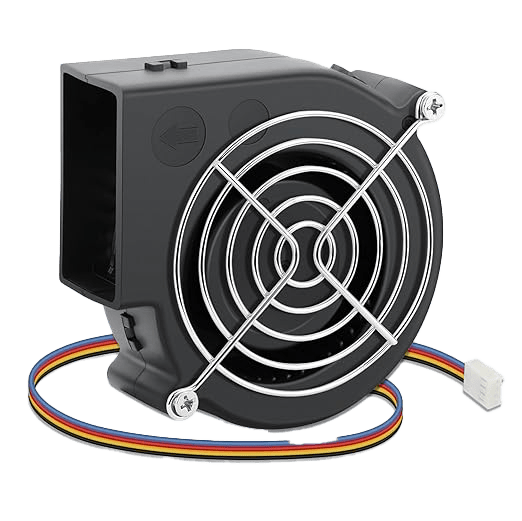
This blower can move 38.5 CFM and has a static pressure of 2 in H20; more than enough for a body enclosed in a suit of armor. The 12V blower will be powered by a high capacity power bank; the same kind that would generally be used to charge a phone or a laptop on the go.
A temperature sensor in the torso region of the body armor will act as the primary input for a microcontroller that will adjust fan speed according to a user setting. The sensor will be placed high and towards the rear in order to represent the hottest area of the armor torso.
Next? Air flow. There are numerous physical behaviors to address to efficiently cool a person; especially in extreme conditions, such as being outside in 105 degree weather. The conduit that will provide air directly from the blower needs to go to both the torso and helmet. However, the helmet will need more air flow than the torso. This is because the helmet has less free space for air to circulate. The high static pressure in that region, needs more force to spread air effectively. This problem is also why a radial blower is used rather than a more common axial fan.
To fix this issue, the air conduit will have a Y-branch, but the portion going to the helmet will support more air than the torso portion. The logic here is, in order to overcome the high static pressure, more airflow needs to be delivered. If the conduit is not bigger than other airflow paths, the helmet region will not be prioritized and will not receive more airflow. Rather the output of the fan will flow equally into both regions.
To keep this short, I will end here. There will be multiple parts to this post to discuss the different facets of this project. I am so excited to share the final product, but it will be a journey!


Leave a Reply